

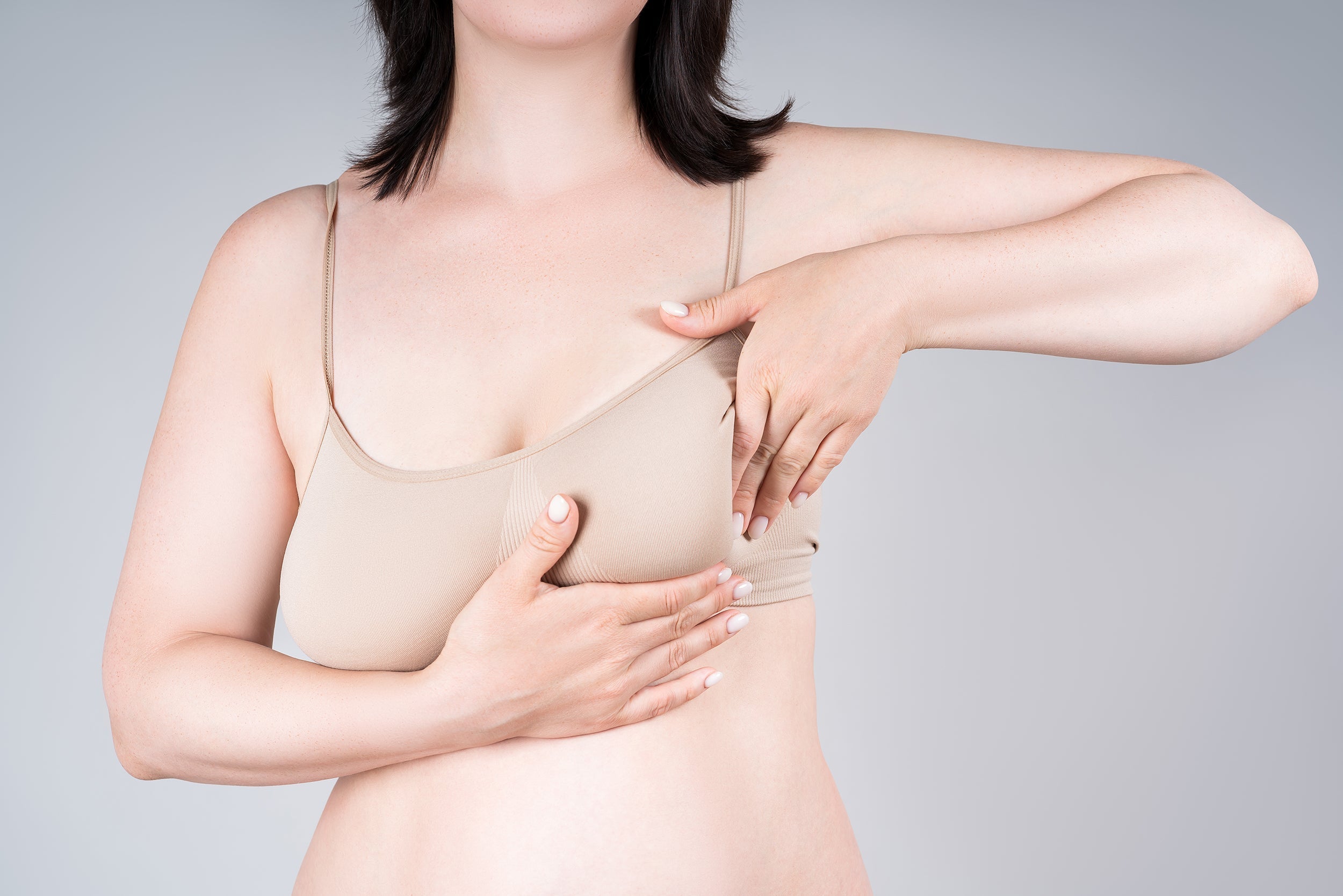
If you've lost a significant amount of weight and noticed changes in the shape, size, or position of your breasts, you are not imagining it, and you are not alone. It's one of the most common changes people experience after weight loss, and yet very few people are told about it ahead of time. Most of the conversation around weight loss focuses on the number on the scale. Almost none of it prepares you for what happens to your skin, your tissue, and your shape once you get there.
This guide is meant to fill that gap. We'll walk through why breasts change shape after weight loss, what you can and can't influence about that process, and what your options look like if you decide you want to address it. The goal isn't to alarm you or to rush you toward surgery. It's to help you understand your body well enough that if you do decide to explore your options, you're doing it from a place of knowledge rather than uncertainty.
Why Breasts Change Shape After Weight Loss
Breast tissue is made up of a combination of glandular tissue, connective tissue, and fat. Of the three, fat is typically the largest component in adult breasts, particularly for people who aren't currently nursing. That composition is exactly why breasts respond so noticeably to weight loss.
When you lose weight, your body doesn't choose where fat comes from with much precision. It pulls fat stores down across the body, including the breasts. As that fat volume decreases, the breast has less to fill the skin that surrounds it. The skin, which had stretched to accommodate a larger volume, is left without enough elasticity to close that gap on its own.
That's the core of the issue. Skin has some capacity to contract, but it's limited, and that limit depends heavily on how much the skin was stretched in the first place and for how long. Skin that was stretched gradually over years, especially skin that was stretched significantly, is less likely to return to its original size than skin that experienced smaller or shorter-term changes.
There's a second layer to this that often gets left out of the conversation: the connective tissue and ligaments that help hold breast tissue in position relative to the chest wall. These structures, sometimes referred to as suspensory ligaments, stretch under the weight of larger breasts over time. Once that stretching happens, the ligaments don't reliably tighten back up just because the breast volume they were supporting has decreased. The result is a breast that may sit lower on the chest even after the weight that stretched things out in the first place is gone.
Put those two things together, fat loss and reduced elasticity of the skin and ligaments, and you get the pattern most people describe: breasts that feel emptier, sit lower, and have lost some of the shape they had before.
No Two Bodies Sag the Same Way
If you've compared notes with anyone else who has lost weight, you've probably noticed that outcomes vary a lot from person to person. Some of that variation comes down to factors that are largely outside anyone's control.
Amount of weight lost.
Larger amounts of weight loss generally mean a larger gap between the skin's original stretched state and the reduced volume it now needs to cover. That gap is a major factor in how noticeable sagging becomes.
Pace of weight loss.
Skin has more chance to adjust gradually when weight comes off slowly. Rapid weight loss, whether through diet, illness, or surgical intervention, tends to leave skin with less time to respond, which often means more visible changes.
Age.
Skin naturally loses collagen and elastin over time, which are the structural proteins responsible for its ability to stretch and recoil. Younger skin generally has more elasticity to work with than skin that has already gone through years of natural aging.
Skin quality and genetics.
Some people's skin is simply more elastic than others, independent of age or weight history. Genetics play a real role here, and it's not something lifestyle choices can fully override.
Starting breast size and density.
Larger breasts, and breasts with a higher proportion of fat relative to glandular tissue, tend to show more dramatic change after weight loss because there's simply more volume being lost.
Number of weight fluctuations.
Skin and ligaments that have been stretched and released multiple times, through repeated cycles of gaining and losing weight, tend to have less remaining elasticity than tissue that has only been stretched once.
Understanding which of these apply to your situation can help set realistic expectations, whether you're trying to minimize changes during an upcoming weight loss journey or trying to understand why the changes you're already seeing happened the way they did.
Can You Prevent Sagging Before It Happens?
If you're in the process of losing weight, or planning to, you may be wondering whether there's anything you can do now to influence the outcome. The honest answer is that you have some influence, but not full control.
Losing weight gradually.
Of everything on this list, pace is probably the factor most within your control. Slower weight loss gives skin more time to adjust incrementally rather than having to contract all at once. This won't eliminate the possibility of sagging, but it may reduce its severity.
Strength training for the chest area.
While you cannot spot-reduce fat from the breasts themselves, building the pectoral muscles underneath the breast tissue can improve the underlying support structure and the chest's overall shape and support. Push-ups, chest presses, and similar resistance exercises are commonly recommended for this purpose.
Consistent skin care.
Keeping skin hydrated and moisturized supports its overall health and suppleness, which may help it respond somewhat better to volume changes. This is a supportive measure rather than a solution on its own, but it's a low-effort one worth incorporating.

Wearing properly fitted, supportive bras throughout your weight loss journey.
A bra that actually fits and provides real support can reduce the day-to-day strain placed on breast ligaments as your body changes size. Many people continue wearing the same bras they've had for years, even as their body changes considerably, which means the support no longer matches the need.
Maintaining a stable weight once you reach your goal.
Repeated cycles of loss and gain place tissue under repeated stretching stress. Reaching a weight you can sustain, rather than cycling through significant fluctuations, reduces the cumulative strain on skin and ligaments over time.
It's worth being direct about the limits here: none of these measures can fully prevent sagging in cases of substantial weight loss, and no amount of lifestyle adjustment can restore skin elasticity that's already been lost. Once skin and ligaments have been stretched past a certain point, the tissue itself needs to be addressed directly, which is where surgical options come in. Knowing this ahead of time is useful, because it means you can start learning what those options actually involve before you're standing in front of a mirror feeling frustrated and unprepared.
When Proactive Planning Makes Sense
Because surgical correction for post-weight-loss breast changes tends to work best once your weight has stabilized, this is exactly the kind of situation where planning ahead tends to make the process easier. Rather than waiting until sagging becomes a source of frustration and then scrambling to research your options, it can be far more comfortable to start learning about them while you're still in the process of reaching your goal weight, or shortly after you've stabilized there.
Some signs that it may be worth exploring your options sooner rather than later include:
-
Feeling that clothing no longer fits the way you'd like, particularly around the chest
-
Noticing that your breasts have changed shape or position in a way that affects your confidence
-
Experiencing physical discomfort from tissue that has lost its natural support, particularly during exercise
-
Wanting to understand your choices now so you're not making a rushed decision later
None of these require you to act immediately. But having the information in hand, understanding what your options are and roughly what recovery involves, means that if and when you decide to move forward, you're doing so with a plan rather than having to research everything after the fact.
Your Surgical Options at a Glance
If lifestyle measures alone don't restore the shape and support you're looking for, several surgical procedures are commonly used to address post-weight-loss breast changes. Each addresses a slightly different concern, so understanding the differences matters more than picking based on the name alone.
Breast Lift (Mastopexy).
This procedure repositions breast tissue and removes excess skin to create a firmer, more elevated contour, without changing the overall breast size. It's typically the right fit for people who are satisfied with their current breast size after weight loss but want to correct sagging and reposition the nipple and areola to a more natural height.
Breast Augmentation.
For people who feel their breasts lost more volume than they're comfortable with, augmentation using implants can restore fullness. This is often combined with a lift when both volume and position need to be addressed, since implants alone don't correct significant sagging.
Fat Transfer to the Breast.
This approach uses fat harvested from another area of your body, often through liposuction, to add modest volume to the breasts. It tends to produce a more subtle size increase than implants, which makes it appealing to people looking for a natural-feeling result using their own tissue rather than an implant.
Augmented Mastopexy (Lift with Implants).
For people who want both the repositioning benefits of a lift and the added volume of augmentation, these two procedures can be combined into a single surgery. This tends to be the most comprehensive option, and also typically involves the longest single procedure and recovery consideration of the group.
Your surgeon will be the best resource for determining which of these, if any, fits your specific anatomy and goals. Factors like how much volume you've lost, how much skin laxity is present, your desired final size, and your overall health all play into that recommendation.
Preparing Before Weight-Loss Related Breast Surgery: What Actually Helps
Whichever path you and your surgeon decide on, one thing holds true across all of these procedures: recovery goes more smoothly when you've prepared in advance rather than trying to figure things out from your couch a day or two after surgery.
One of the most overlooked parts of pre-surgery planning is simply having the right garments ready before your procedure, not after. Regular bras aren't designed for the realities of post-surgical recovery: limited arm mobility, sensitive incision sites, and the need for even, gentle support rather than the structure a typical bra provides. Reaching behind your back to fasten a regular bra can be genuinely difficult, if not impossible, in the days immediately following breast surgery.
This is where a bra designed specifically for post-surgical recovery makes a real difference. heart&core's Shirl Bra, for example, uses a double-zipper front designed specifically for a body that's still changing size, whether that change is coming from the weight loss journey itself or from the swelling and settling that follows surgery. That kind of built-in adjustability matters more here than it might for other procedures, since your chest may still shift in the weeks after surgery even once your overall weight has stabilized. Because heart&core designs across a range of surgery types, you can find a style suited to your specific recovery needs, whether or not your procedure involves surgical drains.
Having at least two of whatever bra you choose on hand before surgery is also worth planning for. That way, you're never stuck wearing a bra straight out of the dryer, which can degrade the compression fibers, because the one you needed sooner wasn't finished air-drying.
It helps to have the rest of your recovery setup ready before your surgery date, too, rather than trying to arrange it from the couch afterward. Loose, front-opening tops that don't require lifting your arms overhead, a designated resting spot with pillows to keep you comfortably elevated, and any ice packs or wound-care supplies your surgeon recommends are all easier to gather in advance. Small conveniences, like keeping your phone charger and a water bottle within arm's reach of wherever you'll be resting most, make a bigger difference than they sound like they should in the first few days, when reaching and twisting are exactly what you're trying to avoid.

What to Expect From a Good Breast Surgery Bra
Whatever bra you choose for recovery, a few features are worth prioritizing regardless of which procedure you have:

Front closure.
Anything that requires reaching behind your back or over your head is going to be difficult, and potentially unsafe, in the days immediately following surgery.

Soft, wide, adjustable straps.
Traditional thin straps can dig into shoulders that are already dealing with swelling and sensitivity. Wide straps distribute pressure more evenly, and adjustability matters because your chest size may shift day to day in early recovery.

No underwire.
Rigid structure creates pressure points exactly where your body needs even, gentle support instead.

Breathable, moisture-wicking fabric.
Healing skin needs to stay dry, and fabric that traps heat and moisture can slow that process down. A quality blend, often something like 95% nylon and 5% spandex, holds its compression over time without losing shape the way lower-quality materials can.

Room to accommodate change.
Whether that's swelling in the first days after surgery or gradual size changes as you continue adjusting post-procedure, a bra with some built-in flexibility will serve you longer than one sized for a single moment in time.
Products like these are also frequently eligible for FSA or HSA reimbursement when purchased for post-surgical recovery, which is worth checking with your specific plan before your procedure so you can budget accordingly.
Most people wear a dedicated recovery bra full-time for several weeks, then gradually reintroduce regular bras as swelling resolves and their surgeon gives the go-ahead. That transition is usually gradual rather than immediate.
Many people find it easier to keep wearing their post-surgical bra for sleep or extended periods even after they've started wearing regular bras during the day, since the softer construction and lack of underwire continue to feel more comfortable against healing tissue for a while longer. Your surgeon is the best source for when it's appropriate to make that switch, since it depends on your specific procedure and how your individual healing is progressing.

For Sagging Breasts After Weight Loss: The Shirl Bra
The Shirl Bra is designed to keep pace with a body that's changing. Its patented double zipper adjusts to fit across a range of sizes and can accommodate post-surgical swelling changes week to week, so you're not caught in a garment that no longer fits mid-recovery. Like Larissa and Serena, it's FSA/HSA eligible.
FAQs: Sagging Breasts After Weight Loss
Will my breasts go back to normal if I gain the weight back?
Not reliably, and this generally isn't recommended as a solution. Regaining weight may restore some volume, but the skin and ligaments that were already stretched and haven't recovered their elasticity won't necessarily tighten back up the way they did before the original weight change. It's also worth noting that repeated weight cycling tends to compound tissue laxity over time rather than reverse it.
How much weight loss does it take before sagging becomes noticeable?
There's no fixed number. It depends on your starting breast size, your skin's natural elasticity, your age, and how quickly the weight came off, among other factors. Some people notice changes after a relatively modest amount of weight loss, while others lose a significant amount without dramatic visible change.
Is it possible to fix sagging without surgery?
Non-surgical measures like strength training, skin care, stable weight maintenance, and supportive bras can help at the margins, and posture also plays a role in how lifted breasts appear day to day. But for more significant sagging, particularly after substantial weight loss, surgical procedures like a breast lift remain the most effective way to meaningfully change the shape and position of the breast.
How soon after weight loss can I have surgery, and do I need to be at my final goal weight first?
Most surgeons prefer to see a stable weight, one you can reasonably maintain for at least a few months, before pursuing surgical correction. Timing matters more here than it might for some other procedures, since continued weight fluctuation after surgery can affect your results.
What's the difference between a breast lift and a breast augmentation for this kind of concern?
A lift addresses position and shape without changing volume, which makes it the right choice if you're happy with your current breast size but want to correct sagging. Augmentation adds volume through implants, which is more appropriate if you feel you've lost more fullness than you're comfortable with. Many people considering post-weight-loss changes benefit from a combination of both.
Will surgery leave visible scarring?
Some scarring is expected with any of these procedures, since incisions are needed to reposition tissue or remove excess skin. How visible that scarring is depends on the specific technique used and your individual healing, and surgeons generally place incisions in locations that are easier to conceal under clothing. Scars typically fade and soften over the months following surgery, though they don't disappear entirely.
Will insurance cover surgery to correct sagging from weight loss?
Coverage for this type of procedure is typically considered cosmetic rather than medically necessary, which means it's usually not covered by insurance. This can vary by provider and individual circumstances, so it's worth confirming directly with your insurance company.
Important Medical Disclaimer
This article is for general informational purposes only and isn't a substitute for professional medical advice. Individual results, timelines, and appropriate treatment options vary based on personal anatomy, health history, and the extent of weight loss involved. Please consult a licensed surgeon or healthcare provider to determine what's appropriate for your specific situation.


