

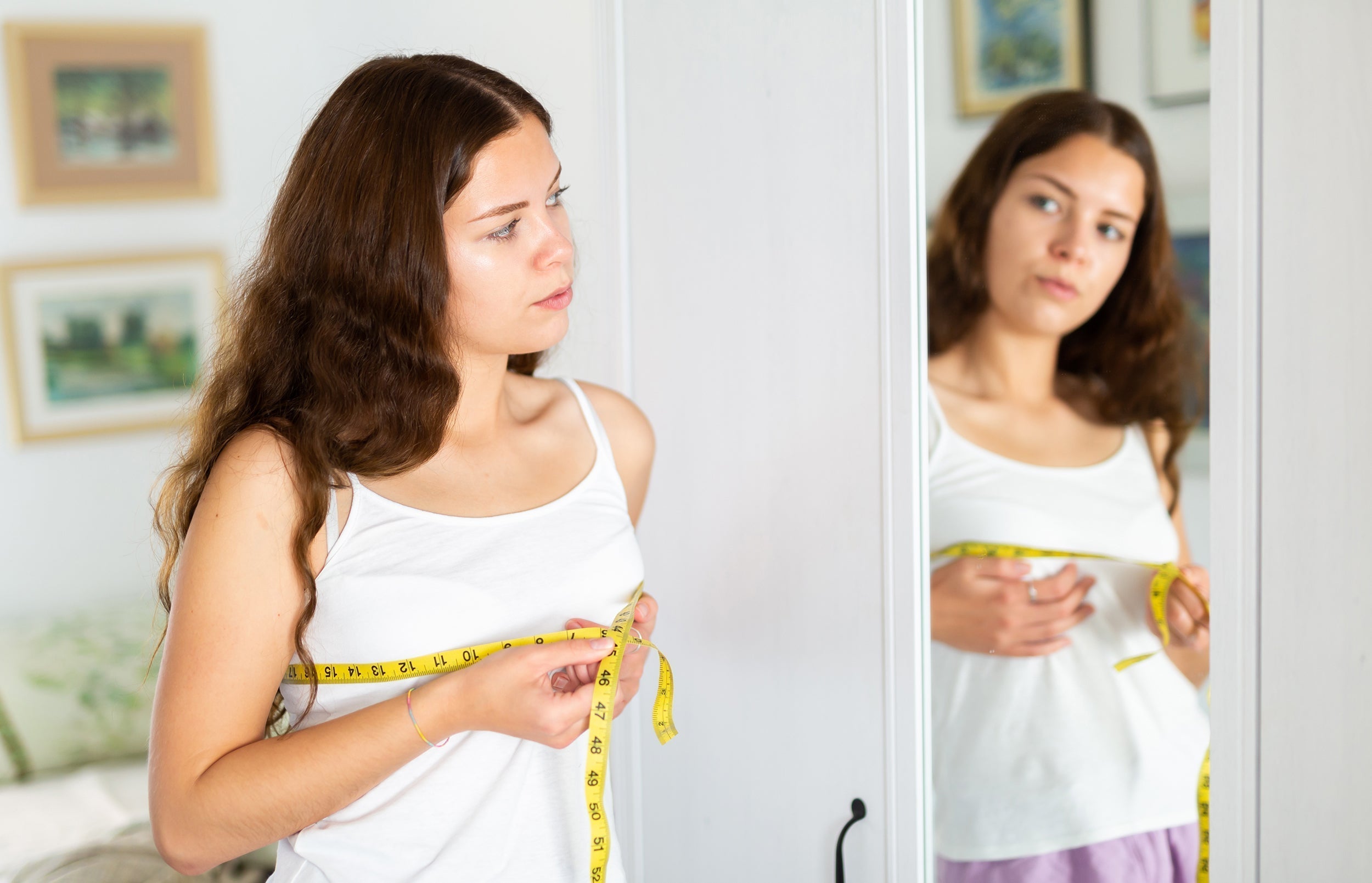
If you've lost a significant amount of weight on Ozempic, Wegovy, Mounjaro, Zepbound, or another GLP-1 medication, you may have noticed something nobody warned you about: your breasts look different. Smaller, softer, less full, maybe a little looser than before. Social media has even given this phenomenon a name — Ozempic breasts — and while the term is more internet shorthand than medical diagnosis, the changes behind it are real, well understood, and worth knowing about before they catch you off guard.
The good news is that this isn't something to panic over. It's not dangerous, and it's not unique to Ozempic specifically. It's simply what happens to breast tissue when the body loses fat quickly — and once you understand the "why," it's much easier to feel prepared for what your body might do, rather than surprised by it. This guide walks through the science, who tends to notice the most change, what you can (and can't) do about it, and how to think proactively about supporting your body through the transition — including what your options look like if you eventually want more.
What "Ozempic Breasts" Actually Means
Let's start with the term itself. "Ozempic breasts" isn't a clinical diagnosis you'll find in a medical textbook. It's a phrase that emerged organically as more people began sharing their weight loss journeys online. It refers to a noticeable reduction in breast volume, along with changes in shape, firmness, and skin elasticity, that some people experience after losing weight on a GLP-1 medication.
The name is a little misleading, though, because there's nothing about semaglutide (the active ingredient in Ozempic and Wegovy) or tirzepatide (in Mounjaro and Zepbound) that specifically targets breast tissue. These medications work by slowing digestion and reducing appetite, which leads to an overall calorie deficit and, over time, meaningful weight loss. The breast changes people notice aren't a side effect of the drug acting on the body directly — they're a downstream result of losing fat everywhere, including in an area that's mostly made up of fatty tissue to begin with.
In other words: your breasts are responding to weight loss the same way they would if you'd lost the same amount of weight through diet and exercise, bariatric surgery, or any other method. GLP-1 medications have simply made rapid, significant weight loss more common — which means more people are noticing this particular consequence of it, often for the first time.
Why It Happens: The Science of Rapid Fat Loss
To understand why breasts change shape during weight loss, it helps to know what breast tissue is actually made of. Breasts are composed of a mix of glandular tissue, connective tissue, and fat — and for many adults, fat makes up a substantial portion of overall breast volume. When the body loses fat systemically, it doesn't choose to spare the breasts. Fat cells throughout the body shrink, breast tissue included, and less fat volume generally means a smaller, less full-looking breast.
There are a few overlapping factors that determine how noticeable this change ends up being:
Speed of weight loss.
The faster the loss, the less time skin and the surrounding connective tissue have to gradually adjust and contract around the new, smaller volume. Skin is elastic, but it isn't infinitely adaptable — it responds better to slow, gradual changes than to rapid ones.
Total amount lost.
Unsurprisingly, more significant weight loss tends to correspond with more noticeable breast volume changes, simply because there's more fat being lost overall.
Skin elasticity.
This varies person to person and tends to decline somewhat with age, prior pregnancies, sun exposure, and genetics. Two people who lose the same amount of weight at the same rate can end up with very different degrees of visible change, largely because of how their skin responds.
Hormonal shifts.
Fat tissue plays a role in estrogen production, so significant fat loss can influence hormone levels. Some people notice breast tenderness or sensitivity changes alongside the volume loss, which is thought to be related to this hormonal shift rather than the medication itself.
When skin doesn't fully retract around the new, smaller breast volume, the result is often described as a "deflated" appearance — less fullness, and sometimes some looseness or sag where the skin envelope was once stretched over more volume. This is the same underlying mechanism that plastic surgeons have documented for years in patients who lose significant weight through any method, well before GLP-1 medications existed.
It's also worth noting that this isn't an isolated phenomenon. The same fat-loss mechanism behind "Ozempic breasts" is behind other terms you may have seen circulating, like "Ozempic face," which describes a similar loss of fullness in the cheeks and under-eye area for the same underlying reason. None of these are unique reactions to GLP-1 medications specifically. They're simply what becomes visible when a body loses a meaningful amount of fat in a relatively short window of time. Framing it this way can help take some of the mystery and some of the anxiety out of noticing these changes in your own body.
Who Tends to Notice the Most Change
Because so many variables are at play, breast changes during weight loss don't look the same for everyone. Being aware of the factors that make more noticeable change more likely can help you set realistic expectations going in, rather than being caught off guard partway through your weight loss journey.
You may notice more visible change if:
-
You're losing weight quickly, particularly in the early months of starting a GLP-1 medication
-
You're losing a significant total amount of weight
-
You're over 35 or 40, when skin elasticity naturally begins to decline
-
You've been pregnant or breastfed in the past, which can already have affected breast skin and tissue
-
You have a family history of skin laxity or a personal history of significant sun exposure
-
You started your weight loss journey with a larger cup size, simply because there's more volume and skin surface area involved
None of these factors mean breast changes are inevitable or that you're destined for a dramatic transformation. They're simply useful context for what to anticipate. Knowing your own risk factors ahead of time means you can plan for the changes proactively, rather than reacting to them after the fact.
It's also worth remembering that these changes tend to unfold gradually over the course of a weight loss journey, not all at once. Many people don't notice much difference in the first several weeks, then start to see more visible change as total weight loss accumulates over months. Because of this timeline, it's easy to be caught off guard partway through. One week your clothes fit the same as always, and a few months later a bra that used to fit perfectly is loose in the cup and sliding at the band.
Checking in periodically on how your bras fit, rather than waiting until something feels obviously wrong, can help you catch these shifts early and adjust before they become uncomfortable.
Can You Prevent or Minimize Ozempic Breasts?
This is the question most people want answered, and the honest answer is: not entirely, but there are things that can help at the margins.
Spot reduction isn't real.
No amount of chest-focused exercise will preferentially preserve fat in the breasts while you lose it everywhere else. Fat loss happens systemically, and where it comes from is determined largely by genetics, not by which muscles you're targeting in the gym.
That said, a few habits are worth building into your routine anyway, both for their general health benefits and for their modest support of skin and tissue quality during a weight loss journey:
Strength training.
Building and maintaining muscle mass, particularly in the chest and upper body, can help support the overall structure of the area, even though it won't restore lost fat volume directly.
Adequate protein intake.
Protein supports collagen production and helps preserve lean muscle mass during a calorie deficit, both of which contribute to how tissue holds up over the course of weight loss.
Hydration.
Well-hydrated skin tends to maintain elasticity better than dehydrated skin, which can make a modest difference in how the skin envelope responds to a shrinking breast volume.
A consistent skincare routine.
Some people find that a routine built around moisturizing and skin-barrier support — along with topical treatments like retinoids, when appropriate and recommended by a dermatologist — helps skin quality during periods of significant change.
Losing weight gradually, if possible.
Working with your prescribing provider to find a pace of weight loss that balances your goals with giving your skin more time to adjust can make a real difference in the end result.
It's worth being upfront with yourself: these strategies can help around the edges, but they won't prevent breast changes altogether if you're losing a significant amount of weight quickly. Approaching this proactively means accepting that some change is likely, rather than expecting to engineer your way out of it entirely.

The Shirl Bra: Supporting Your Body Through the Transition
While you're in the middle of a weight loss journey, your body is changing. Sometimes it's week to week, and sometimes faster than that. One of the most practical, immediate things you can do is make sure you're supporting your changing shape with a bra that's actually built to accommodate weight fluctuation, rather than fighting against it.
Traditional bras are designed around the assumption that your size is stable. Underwire, in particular, is built around a fixed rib cage measurement and a fixed cup volume, which makes it a poor fit for a body that's actively losing volume and reshaping itself, often unevenly, from one side to the other or from week to week. A bra that fit perfectly three months ago may now be digging in, riding up, or leaving you without any real support at all.
This is one of the areas where heart&core has spent a lot of time thinking specifically about bodies in transition — not just after surgery, but through significant weight change, too.
A few features worth looking for in a supportive bra during this stage of your journey:

No underwire.
A soft, flexible structure moves with a changing shape instead of digging into tissue that's already adjusting.

A breathable, moisture-wicking fabric blend.
heart&core uses a 95% nylon/5% spandex blend specifically because it holds its shape and stays comfortable through repeated wear and washing, without losing its supportive stretch.

Front closure
So getting dressed doesn't depend on reaching behind your back or fighting with a fastener that's constantly shifting position as your band size changes.

Wide, adjustable straps
These can be lengthened or shortened as your shoulders and upper body change shape, without digging in or sliding off.

Genuine accommodation for size fluctuation, not just a single fixed fit.
Since a body in the middle of significant weight loss rarely stays the same size for long. heart&core's Shirl Bra was actually built with exactly this kind of transition in mind.
Its double-zipper front closure gives you two distinct sizing options in a single bra, so as your band size changes with ongoing weight loss, you can adjust the fit yourself rather than needing to size down into a new garment every few weeks. It's a detail that was designed with bariatric recovery and weight-related size change specifically in mind, which makes it a practical option to have on hand during a GLP-1 journey, not just after a surgical procedure.
And because heart&core's compression and support bras are FSA and HSA approved through sig-is.org, they can often be purchased using pre-tax health savings dollars — a small practical detail that makes it easier to prioritize a supportive bra as part of your overall care during this stage, rather than an afterthought.
SHOP THE BEST BRA FOR OZEMPIC-RELATED WEIGHT LOSS

When to Consider Talking to a Surgeon
For some people, the changes that come with significant weight loss are something they're comfortable with — a visible marker of real progress, even if it comes with a different silhouette than before. For others, the volume loss and skin laxity are noticeable enough that they start wondering what their options are for restoring fullness or lift down the road.
If that's you, it's worth knowing that this is an extremely common conversation for plastic surgeons to have with patients who've lost significant weight through any method, GLP-1 medications included. Broadly speaking, the surgical options that come up tend to fall into two categories: procedures that restore volume, and procedures that address excess or loose skin. Some patients pursue one; many pursue a combination of both, depending on their specific goals and the degree of change they've experienced.
A few things surgeons generally recommend keeping in mind if you're considering this path:
Weight stability matters.
Most surgeons prefer to operate once your weight has been stable for a period of time, rather than while you're still in the middle of active loss, so that the results reflect your body at its settled state.
Your goals should drive the conversation.
Whether you're looking to restore fullness, address sagging, or both, being clear with your surgeon about what's bothering you most helps guide which approach makes sense for your situation.
This is a personal decision, not an obligation.
Plenty of people go through significant weight loss and choose not to pursue any surgical intervention at all — the changes described in this article are common and not medically concerning on their own.
If and when you do reach the point of considering a procedure, that's a much more detailed conversation to have directly with a board-certified plastic surgeon, who can evaluate your specific anatomy, skin quality, and goals in person.
The Bottom Line
"Ozempic breasts" is a catchy label for something that's really just biology: fat loss doesn't skip the breasts, and skin doesn't always keep pace with a rapidly shrinking volume underneath it. It's common, it's not dangerous, and while you can't fully prevent it, understanding why it happens means you can approach your weight loss journey with realistic expectations instead of surprise.
In the meantime, supporting your body through the transition with a bra that actually accommodates a changing shape can make the day-to-day experience of this journey a lot more comfortable, whether that change is something you plan to address surgically down the road or simply live with as one part of a much bigger transformation.
FAQ: Your Top Questions About Ozempic Breasts
Is "Ozempic breasts" a real medical condition?
Not exactly. It's not a distinct medical diagnosis. It's a colloquial term describing a common, well-understood consequence of rapid fat loss on breast tissue, which is largely made up of fat.
Are Ozempic breasts dangerous or a sign of a health problem?
No. Volume loss and skin changes in the breast from weight loss are not dangerous and don't increase breast cancer risk on their own. That said, any new or changing lump, asymmetry, or unusual finding should always be evaluated by a doctor to rule out something unrelated.
Will my breasts go back to normal if I gain the weight back?
Some volume may return if you regain weight, since breast tissue responds to overall body fat the same way it did during the loss. However, skin that has already lost elasticity may not fully re-drape around the restored volume, so many people don't return to their exact original appearance even if they regain some weight.
Why do my breasts look uneven after losing weight?
It's common for breasts to lose fat at slightly different rates from one side to the other, which can make minor asymmetry more noticeable once overall volume decreases. Mild asymmetry is normal, but a new or worsening difference between sides is worth mentioning to your doctor.
Can exercise prevent breast volume loss during weight loss?
Not directly. You can't target fat loss to spare a specific area of the body, including the breasts. Strength training can help support the surrounding tissue and posture, but it won't preserve breast fat specifically.
Does losing weight more slowly help prevent breast changes?
It can help at the margins. A slower rate of weight loss gives skin more time to gradually adjust to a shrinking volume, which may reduce the degree of visible looseness compared to very rapid weight loss, though it won't eliminate volume loss altogether.
What can I do about breast changes without surgery?
Supportive habits like strength training, adequate protein intake, hydration, and a consistent skincare routine can help at the margins, and a well-fitted, adjustable bra can make a real difference in day-to-day comfort and appearance while your body is still changing.
When should I consider talking to a plastic surgeon about my options?
Many people wait until their weight has been stable for a period of time before exploring surgical options like a breast lift or augmentation, since this gives a clearer picture of the body's settled state. If breast changes are something you're considering addressing surgically, a consultation with a board-certified plastic surgeon is the best next step to understand what's realistic for your specific situation.
Important Medical Disclaimer
This article is intended for informational purposes only and should not be considered medical advice. Always consult with your prescribing provider, primary care doctor, or a board-certified plastic surgeon regarding your specific weight loss journey, any breast changes you're experiencing, and whether surgical or non-surgical options are appropriate for you. Individual experiences vary significantly based on the amount and rate of weight loss, age, skin elasticity, genetics, and other individual factors, and this article should not be used to self-diagnose or self-treat any symptoms you may be experiencing.


