

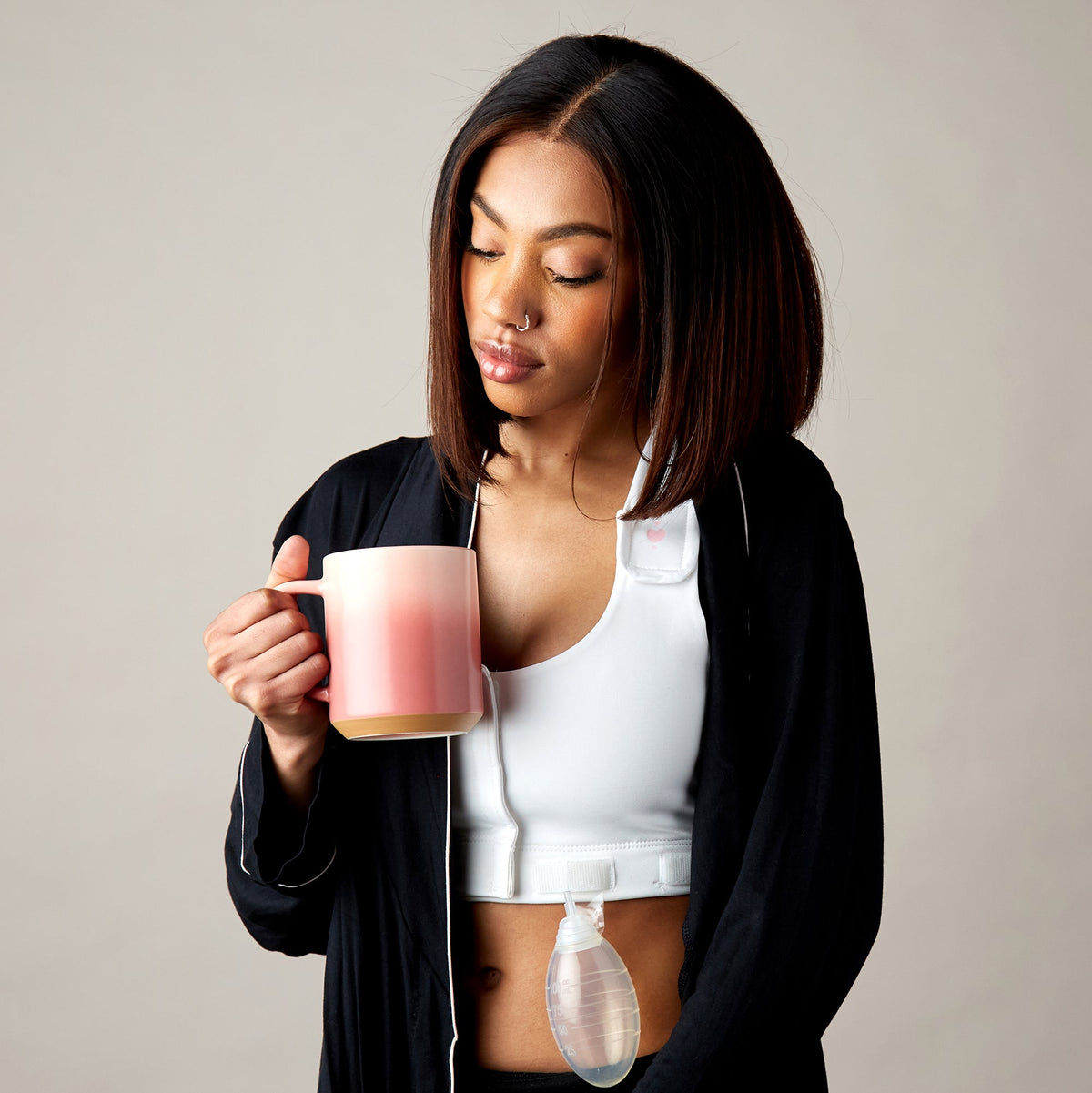
Yes, most people can wear a bra with tissue expanders, provided their surgeon has approved it and the bra is designed for the purpose. A standard bra is not. Tissue expanders change in size over several weeks, the skin and chest tissue around them is healing, and many everyday bras apply pressure in places that a healing chest cannot tolerate.
If you are preparing for a mastectomy or another surgery that includes tissue expanders, you are likely managing a long list of decisions. The bra question can seem minor next to surgical dates and consultations, but it affects your comfort every day of recovery, and you can fully prepare for it before surgery.
This guide explains what tissue expanders are, how fills work, what to ask your surgeon, and which bra features matter most between fills, so you can gather what you need ahead of time.
What Tissue Expanders Are and How Fills Work
A tissue expander is a temporary implant with a flexible silicone shell, placed under the skin and often under the chest muscle during or after a mastectomy. Its purpose is to stretch the skin and muscle gradually so there is enough space for a permanent implant or other reconstruction later. The expander contains a small injection port, which allows a surgeon to add sterile saline over time.
After surgery, you will typically wait a few weeks for the incisions to heal before fills begin, and your surgical team decides the timing. Fill timing and spacing vary between clinics. Fills are usually done in the surgeon's office, where the surgeon locates the port and adds a measured amount of saline through a thin needle. Most people receive a series of fills spaced one to three weeks apart until the chest reaches the planned size.
Once expansion is complete, many surgeons wait before exchanging the expander for a permanent implant in a second surgery, and the total time with expanders can span several months.
For daily life, the important point is that your chest does not stay the same size during this period. It changes with each fill, and it can also change with swelling, fluid shifts, and activity. A bra that fits well one week may feel too tight or too loose the next.
Why Bra Choice Matters Between Fills
The weeks between fills are still part of active recovery. Incisions are healing, the skin is stretching, and the chest muscle may be sore. Several things about a bra can affect how that time feels.
Pressure on healing tissue. Rigid components, stiff seams, or narrow bands can press on incision lines or on skin that is already stretched. Pressure in the wrong place can cause irritation, and it can be uncomfortable for hours at a time.
Support for the expander. Expanders can feel heavier and sit differently than natural breast tissue. A supportive, well-constructed bra limits movement, which many people find reduces soreness during daily activity.
Skin condition. Skin over expanders is thinner and more sensitive than usual. Fabrics that stay dry and move air away from the skin help reduce irritation, especially if you are wearing a bra for most of the day and night.
Ease of dressing. Reaching behind your back to fasten a bra is difficult after chest surgery. A bra you can put on and remove without raising your arms or twisting your torso protects your range of motion while you recover.

Questions to Ask Your Surgeon Before Surgery
Surgeons have different protocols for post-operative garments. Asking these questions at a pre-surgery appointment lets you shop with clear guidance instead of guesses.
- When should I start wearing a bra after surgery? Some surgeons recommend a surgical bra immediately, and others have a specific timeline.
- Do you want me to wear a bra day and night, or during the day only? This affects how many bras you need and which styles are most comfortable.
- Do I need a particular level of compression? Some surgeons prefer light compression, and others have different instructions depending on the procedure.
- Should I avoid underwire entirely, and for how long? Many surgeons advise against underwire, particularly in early recovery, but timing varies, so confirm the timeline for your situation.
- Will I have surgical drains, and how long might I have them? Drains affect which bra features are helpful. Some bras include tabs or holders for drain bulbs.
- Which arm movements should I avoid, and for how long? The answer affects how you dress and which closures will be practical in the first weeks.
- Is there anything I should avoid on fill days? Ask whether you should plan to wear something looser or more adjustable on appointment days.
- When can I return to a regular bra? The answer often depends on whether you proceed to a permanent implant, and the surgeon can outline the likely sequence.
Write the answers down and bring them with you when you shop.
What to Look for in a Bra With Tissue Expanders
Surgeon guidance comes first, and it varies: some surgeons advise a bra soon after expander placement, and others advise waiting or wearing nothing until a later stage. Within that guidance, these features are the ones that matter most for most people wearing expanders. heart&core's Shirl, Larissa, and Serena bras are referenced below as examples of each feature.
Fabric and Materials
A blend such as 95% nylon and 5% spandex provides even support without losing its shape after repeated washing, with enough stretch to move with your body and enough firmness to stay supportive.
Look for fabric that is breathable and moisture-wicking, since skin over incisions and expanders stays healthier when it is dry. The Shirl, Larissa, and Serena bras all use the 95% nylon and 5% spandex blend, and they are made with soft, breathable, moisture-wicking fabric finished without rough edges, which suits skin that is sensitive after surgery. The brand describes their compression as firm and gentle, a range that suits tissue that is still healing, and each bra includes surgical design features chosen for recovery.
No Underwire
A surgical bra for expanders should not have underwire. This rigid structure runs along the lower edge of the breast, where incisions and expanders are positioned after reconstruction surgery, and it can press into healing tissue and shift as the expander changes in size. Support should come from a wide, flat band instead. The Shirl, Larissa, and Serena bras contain no underwire and use a wide, flat band designed not to roll or twist, so the bra stays in position throughout the day.
Front Closure
After chest surgery, raising your arms behind your back is difficult and sometimes not permitted. A front closure lets you dress with your arms close to your body and adjust the bra yourself. All three bras close at the front. The Shirl uses a patented double-zipper opening with a snap at the top that makes it easier to zip, which helps when reach and grip are limited during recovery.
Wide, Adjustable Straps
Wide straps distribute pressure across a larger area of the shoulder, which is more comfortable than narrow straps that can dig in over long periods. Adjustability matters as well: as expanders are filled, the position of the bra on your body changes, and straps you can lengthen or shorten maintain a comfortable fit. The Shirl, Larissa, and Serena bras each have wide, adjustable straps, so the fit can be refined after each appointment without a new purchase.
Accommodation for Swelling and Size Fluctuation
This is one of the most important qualities for a bra worn with expanders, because your chest changes with each fill and swelling varies from day to day. Look for adjustable components and a fabric that stretches without losing support. If you are between two sizes, many fitting guides suggest the larger size, because a bra that is too tight can press on incisions. The Shirl is designed to adapt to a changing body through its double-zipper front, and the Larissa is offered from X-Small (28-inch band) through Super Queen (56 to 60-inch band). The brand's What's My Size? guide lets you compare your measurements before you order.
Check the fit by looking for even pressure. The band should be snug but allow you to breathe comfortably, and you should be able to slip a finger under it. Persistent marks, numbness, tingling, or pain indicate that the bra is too tight, and you should contact your surgeon if those symptoms appear.

A Timeline: Before Surgery Through Fill Days
Thinking about the bra in stages helps you decide what to buy and when.
Before Surgery
This is the best time to prepare. Order your bras at least a week or two before the surgery date so you have time to exchange sizes if needed. Because your post-surgery chest will not match your pre-surgery measurements, many people size from their band measurement, allow room for swelling, and use the manufacturer's size guide. Wash new bras before surgery, and pack at least one in your hospital bag if your surgeon permits it. The 30-day exchange window on unworn Shirl, Larissa, and Serena bras leaves time to change a size if your measurements shift.
The First Days After Surgery
Your chest is at its most tender. Some surgeons recommend a soft, front-closing surgical bra during this stage, while others advise waiting, and some place a compression garment before discharge. Follow whatever your team provides, then switch to your own bra when instructed. If you have drains, a bra with a place to secure the drain bulbs keeps them from pulling on the incisions as you move. The Larissa's drain tabs, based on the Prody™ Drainage Bulb Holder, hold drain bulbs against the bra, and its internal pockets are designed for this stage.
The Weeks Before the First Fill
Swelling typically decreases and incisions continue to heal. Establish a routine with two or more bras so you can rotate them.
Between Fills
During the expansion period, your chest grows gradually. Check the fit of your bra after each appointment. If you cannot get a comfortable fit by adjusting the straps and front closure, ask your surgeon whether a different size is appropriate. The Shirl's double zipper adjusts at the front as each fill changes your size, and its wide adjustable straps can be shortened or lengthened to match.
Fill Days
The chest often feels tighter for a day or two after a fill, and some people feel pressure across the chest or into the shoulders. On fill days, wear a bra that is easy to remove and replace, since you will need to undress for the appointment. A front opening that adjusts, such as the Shirl's double zipper, also makes it easier to loosen the bra after a fill. Bringing a second bra with a slightly looser fit can be useful if you notice increased tightness afterward.
Size Changes, Closures, and Drains
Because size change is part of the expansion process, the way a bra adjusts matters as much as its initial fit. This is where designs differ.
The Shirl Bra uses a patented double-zipper front closure, which allows the front opening to be adjusted as the body changes. This design is intended for size changes of many kinds, including weight-related changes, and it is also used after procedures that limit mobility. It is a compression bra with a 95% nylon and 5% spandex blend, and it has no underwire, a wide flat band, and wide adjustable straps. As a compression bra, it is designed to adapt to a changing body. The adjustable front can be helpful for someone whose chest changes between appointments, and the same flexibility is useful for anyone whose body is also changing for other reasons during recovery, such as weight loss.
If your surgery includes drains, the Larissa Bra has specialized drain tabs, based on the Prody™ Drainage Bulb Holder, that hold drain bulbs securely, along with internal pockets and a wide, flat band. After the drains are removed, the Serena Bra is intended for that stage, with the same fabric, adjustable straps, front closure, and internal pockets, but without the drain features. It is designed for people who no longer have drains or did not need them after breast, heart, lung, or other upper body surgery. All three bras are also used after heart surgery, breast augmentation, reduction, lifts, and other upper body procedures, so the features described here are not limited to expander recovery.
Whichever brand or style you choose, compare how the closure adjusts, whether the band stays flat, how wide the straps are, and whether the fabric is soft against sensitive skin.
Which heart&core Bra Fits Each Stage of Tissue Expander Recovery?
All three bras close at the front, have no underwire and are FSA and HSA eligible. The right one depends on whether you have drains and how much your size is changing between fills.

Larissa Bra: Drain Holders + Internal Pockets
If your surgery includes drains, the Larissa Bra has built-in drain tabs, based on the Prody™ Drainage Bulb Holder, that hold each bulb against the bra. It also has internal pockets and a front Velcro closure, so you can put it on and take it off without pulling anything over your head.


Serena Bra: Internal Pockets
Once your drains are removed, or if your recovery never included drains, the Serena Bra offers the same fabric, front Velcro closure and internal pockets as the Larissa without the drain tabs.


Shirl Bra: Double Zipper for Changing Sizes
Each fill changes how your chest fits. The Shirl Bra has a patented double-zipper front that you can adjust at the top and bottom, so it is easy to loosen on fill days and adjust again as your size changes.

Pre-Surgery Preparation Checklist
A short checklist helps you finish preparation before your surgery date.
- Confirm surgeon guidance. Ask the questions listed above and write down the answers.
- Choose a front-closing style without underwire. This reduces strain on your chest and arms, and all three bras described above meet both criteria.
- Measure and review the size guide. Use your current band measurement and the manufacturer's chart. If you are between sizes, consider swelling and the larger size. The brand's size guide lists band measurements for each size.
- Buy at least two. Care and rotation are covered in the next section.
- Check the return and exchange policy. Because your chest will change, a flexible exchange window is helpful, and the Shirl, Larissa, and Serena bras can be exchanged within 30 days if unworn.
- Match the bra to the stage. The Larissa suits recovery with drains, the Serena suits recovery after drains are removed, and the Shirl suits changing sizes.
- Plan for drains if applicable. Decide before surgery whether you need a bra with drain management features.
FSA and HSA Eligibility
Some post-surgical bras are eligible for payment with flexible spending account (FSA) or health savings account (HSA) funds. heart&core bras are approved for FSA and HSA use through IIAS certification at sig-is.org, which means you can use pre-tax funds to purchase them. This approval applies to the Shirl, Larissa, and Serena bras. Some insurance plans may also reimburse post-surgical garments, but coverage varies, so contact your insurance provider to ask what documentation they require. Keep your receipts, and ask your surgeon's office whether a prescription or letter of medical necessity would help.
Care and Replacement
Support depends on the elastic fibers in the fabric, so washing methods affect how long a bra performs well.
- Washing. Hand wash when possible, or use a lingerie bag, a gentle cycle, and mild, fragrance-free detergent. Avoid fabric softener, which can coat the fibers and reduce elasticity.
- Drying. Air dry flat or hanging. Because the Shirl, Larissa, and Serena bras contain 5% spandex, heat from a dryer can shorten the life of the elastic fibers.
- Rotation. Wear one bra while the other is washed, so each has time to recover its shape between wears.
- Replacement. Plan to evaluate bras every four to six months with regular use, or sooner if the fabric stretches and does not return or the band no longer feels supportive.
FAQ: Bras and Tissue Expanders
Can you wear a bra with tissue expanders?
Yes, in most cases. Your surgeon will tell you when to begin and which type to wear. When a surgeon advises a bra, a soft, front-closing style without underwire is a common recommendation, and all three bras described above fit that description.
Can you wear an underwire bra with tissue expanders?
Many surgeons advise against it, though guidance varies by surgeon and institution. Ask your surgeon for specific guidance on when, or whether, you can return to underwire. The Shirl, Larissa, and Serena bras have none.
How soon after surgery can I start wearing my own bra?
It depends on the surgeon and the procedure. Some people are placed in a surgical garment before leaving the hospital, and others are given a timeline for switching.
Should I wear a bra to sleep?
Some surgeons recommend it, especially in the early weeks, because it limits chest movement and can reduce discomfort, while others do not require it. Choose a soft style with flat seams and no rigid components, as in the Shirl, Larissa, and Serena bras, and follow your surgeon's instructions.
How tight should the bra feel after a fill?
It should feel snug and supportive, and you should be able to slip a finger under the band. Contact your surgeon if you have pain, numbness, tingling, or difficulty breathing, or if discomfort continues or increases.
Which bra style works at each stage of recovery?
If you have drains, the Larissa Bra has drain tabs. Once the drains are removed, or if you did not need drains, the Serena Bra offers a similar fit without them. The Shirl Bra has a double-zipper front that adjusts as your size changes. Your surgeon can advise which stage applies to you, and the brand can answer fit questions at info@heartandcore.com.
Can I use FSA or HSA funds for a post-surgical bra?
Often, yes. heart&core bras are FSA and HSA approved through IIAS certification at sig-is.org. Confirm requirements with your plan administrator, and ask about itemized receipts before you order.
Will I need a different bra after the expanders are replaced with implants?
Probably. The chest changes again after the exchange surgery, and your surgeon may recommend a different garment during that recovery. Ask about it at your pre-surgery appointment so you can plan.
Disclaimer
This article is intended for informational purposes only and should not be considered medical advice. Always consult your surgeon or healthcare provider about your specific recovery needs, including when to begin wearing a bra, which style is appropriate, and how to care for your incisions and tissue expanders.
Individual results and recovery timelines vary based on the procedure, individual healing, and adherence to post-operative instructions. The bra features and recommendations described in this article are general guidelines, and specific product choices should be made in consultation with your surgical team.
Practices for bras, underwire, drains, and fill schedules differ between surgeons and institutions, and the descriptions of tissue expanders in this article are general. FSA, HSA, and insurance eligibility depend on your plan, so confirm details with your plan administrator before purchasing. Contact your surgical team promptly with concerns about pain, swelling, redness, or drainage.


