

If you've been handed a post-surgery checklist with "compression bra" on it, you're probably wondering what makes it different from every other supportive bra you've ever owned. And if you're searching online, you've likely discovered a confusing maze of options—some promising "medical-grade support," others looking suspiciously like regular sports bras with premium price tags.
So what actually is a compression bra? And more importantly, how do you know you're getting one that will genuinely support your recovery?
Here's the thing: compression bras aren't just glorified shapewear or tight sports bras with fancy marketing. They're legitimate medical garments designed to work with your body's natural healing processes—whether you're recovering from breast surgery, managing a chronic condition like lymphedema, or dealing with specific medical needs that require therapeutic support.
Recovery is hard enough without searching for proper support. Understanding what compression bras actually do—and what separates the genuinely helpful ones from the disappointing impostors—means you can focus your energy on healing instead of second-guessing your recovery garment choices.
Compression Bras Decoded: More Than Just a Tight Bra
Let's start with the million-dollar question: What exactly transforms a regular bra into a compression bra?
A compression bra is a specialized medical garment engineered to apply consistent, graduated pressure across the chest, breast, and often upper torso areas. Unlike regular bras that primarily provide support against gravity, compression bras deliver therapeutic pressure measured in millimeters of mercury (mmHg)—the same unit doctors use for blood pressure readings.
This isn't random squeezing. Quality compression bras create what's called a pressure gradient, applying slightly different levels of pressure to different areas. The goal? Encouraging your body's fluids to flow in specific directions, supporting healing tissues, and creating optimal conditions for recovery or symptom management.
In practical terms, a compression bra is what you wear when your body needs external support to do something it can't quite manage on its own—whether that's draining excess fluid after surgery, supporting reconstructed breast tissue, managing chronic swelling, or maintaining stability in healing areas.
The key here is therapeutic. These garments are prescribed or recommended by healthcare providers because they serve a medical purpose, not just because they make you look smoother under clothing.
Your sports bra compresses during activity and then you take it off. Shapewear compresses for aesthetics and comfort be damned. Regular supportive bras lift and shape using underwires, seams, and strategic padding.
Compression bras? They're designed for extended wear—sometimes 23 hours a day—with comfort features that make that possible. They apply consistent pressure that doesn't diminish with movement. They're constructed with healing bodies in mind, which means no underwires poking surgical sites, no decorative seams irritating sensitive skin, and no clasps in inconvenient locations when you can barely lift your arms.

The Science of Squeeze: How Compression Actually Works
Your body is basically a sophisticated plumbing system, and compression bras work with that system rather than against it. When you apply graduated compression—more pressure in some areas, slightly less in others—you create a subtle current that encourages fluids to flow in beneficial directions.
Imagine your lymphatic system as a lazy river at a water park. Normally, the current keeps everything flowing smoothly. But after surgery or with certain medical conditions, that current slows down or gets blocked. Compression bras act like strategically placed jets, giving the flow a helpful nudge in the right direction.
This pressure gradient helps move excess fluid away from surgical sites or swollen areas toward functioning lymph nodes that can process it. It's not forcing anything—it's creating conditions where your body can do what it wants to do anyway, just more efficiently.
When you undergo breast surgery, lose significant weight, or experience tissue trauma, your body's internal support system gets disrupted. Compression bras provide external scaffolding while your body rebuilds its internal architecture. Tissues that heal under appropriate compression tend to settle more smoothly, with less irregular scarring and better final contours.
This surprises people: proper compression actually improves circulation rather than restricting it. The gentle, consistent pressure helps pump blood and lymph fluid through healing areas, delivering oxygen and nutrients while removing waste products that can slow recovery.
Your body's inflammatory response after surgery or injury is natural and necessary—but left unchecked, excessive swelling can become problematic. Compression bras help modulate this response, preventing the "too much of a good thing" scenario where helpful inflammation becomes counterproductive excess fluid accumulation.
When Do You Actually Need a Compression Bra?
Not everyone needs a compression bra, and understanding when they're truly beneficial versus when they're optional helps you make informed decisions.
After Mastectomy: Whether you're having reconstruction immediately or later, compression bras provide crucial support to surgical sites, help manage post-operative swelling, and create stable conditions for healing. They're particularly important for preventing seromas (fluid collections) that can complicate recovery.
Following Breast Reconstruction: Your newly reconstructed breasts need consistent support while tissues adapt to implants or transferred tissue. Compression helps everything settle into the proper position and reduces complications that could affect final results.
Post-Breast Reduction or Lift: These procedures involve significant tissue rearrangement. Compression bras support your new breast shape while internal sutures heal, helping maintain smooth, even healing.
After Upper Body Liposuction: When fat is removed from the chest, back, or arm areas, compression becomes essential for managing swelling, supporting skin retraction, and achieving smooth contours rather than lumpy irregularities.
Lymphedema Management: This chronic swelling condition often affects the chest and breast area after cancer treatment. Compression bras provide the consistent pressure needed to manage symptoms and prevent progression.
Chronic Pain Conditions: Some people with conditions like fibromyalgia or chronic costochondritis find that gentle compression provides pain relief and stability that reduces discomfort during daily activities.
Let's be clear about when you probably don't need a medical compression bra: general exercise (sports bras handle this), everyday breast support (regular bras work great), minor cosmetic preferences (shapewear exists for this), or during pregnancy unless specifically recommended by your healthcare provider for a medical reason.

Compression Bra Design Features That Separate Medical-Grade from Pretenders
Not all compression bras are created equal, and understanding the features that actually matter helps you distinguish between legitimate medical garments and overpriced disappointments.
Premium Fabrics
The fabric blend in a compression bra directly impacts both therapeutic effectiveness and wearability. High-quality compression bras use specific blends engineered for medical use. For example, a 95% nylon/5% spandex blend offers the ideal combination of support and flexibility—silky soft against healing skin yet strong enough to maintain consistent compression through repeated washing and extended wear.
Medical-grade fabrics actively wick sweat away from healing surgical sites or sensitive skin. Quick-drying properties aren't just about comfort—keeping skin dry prevents infections, breakdown, and complications that could derail your recovery.
Quality compression bras incorporate antimicrobial treatments directly into the fabric itself, providing additional protection for vulnerable, healing tissues. This built-in protection works 24/7 without relying on topical applications that wash away.
Front Closures
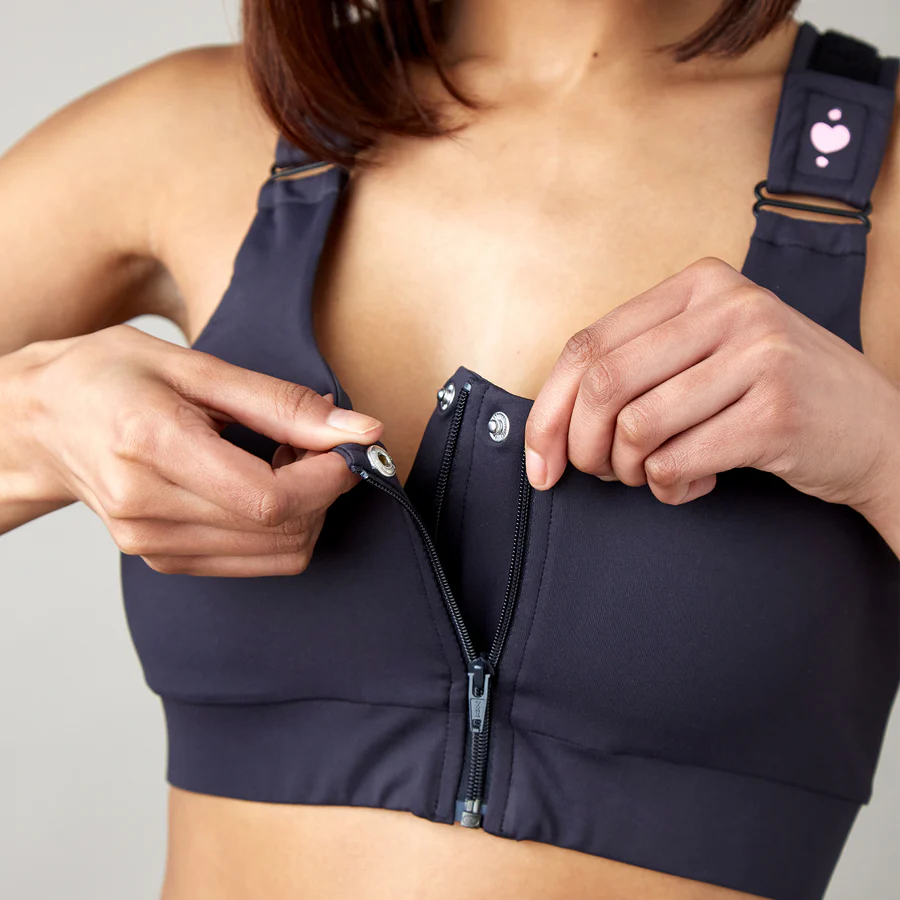
After chest surgery, reaching behind your back can range from uncomfortable to impossible. Front closures aren't just convenient—they're essential. Medical-grade front closures should use materials that won't irritate sensitive post-surgical areas.
Adjustability
The best designs incorporate features like wide, adjustable shoulder straps with medical-grade Velcro closures that provide security and adjustability without creating pressure points.
Drain Management
Some thoughtfully designed compression bras include practical elements like built-in drain management tabs that help drains lay flat against a wide band for comfort, unlike irritating pins or rings that can swing, get caught on clothes, pull, or twist.
Internal Pockets
Post-mastectomy compression bras often include internal pockets designed to securely hold breast forms, puffs, or even cooling inserts for comfort. These pockets serve multiple purposes throughout different recovery stages and may qualify the bra for insurance reimbursement with a prescription.
Accommodates Changes
Your body changes during recovery—sometimes daily in early healing stages. Quality compression bras accommodate these fluctuations through multiple adjustment points. Wide, cushioned straps with sliding adjusters let you modify shoulder support as swelling changes. Some innovative designs feature universal band sizing that accommodates a range of measurements within each size, reducing the guesswork during recovery when your body is changing.
Seamless Design
Seams are the enemy of post-surgical comfort. Premium compression bras either eliminate seams entirely through advanced knitting techniques or strategically place them away from surgical sites, scar tissue, and sensitive areas.
SHOP THE BEST COMPRESSION BRAS

Compression Bras vs. Everything Else: Understanding the Differences
Let's settle some confusion about how compression bras differ from other supportive undergarments you might already own.
Compression Bras vs. Sports Bras
The confusion is understandable—both provide firm support and can look similar. But the differences matter significantly for your recovery.
Sports bras are designed for temporary wear during physical activity. They compress to minimize bounce and movement, but they're not engineered for the graduated pressure gradient or extended wear requirements of medical compression. Most sports bras also include features like moisture traps or decorative seams that work fine for the gym but become problematic for 20-hour daily wear.
Compression bras maintain consistent therapeutic pressure regardless of activity level. They're constructed for all-day wear with comfort features that make extended use tolerable. The compression doesn't just smash everything flat—it strategically supports healing or managing medical conditions.
Bottom line: Your favorite running bra won't cut it for post-surgical recovery, and your compression bra probably isn't ideal for high-intensity workouts.
Compression Bras vs. Regular Supportive Bras
Even the most supportive regular bra isn't a substitute for medical compression. Regular bras use underwires, molded cups, and padding to lift, shape, and support against gravity. They're designed for healthy, stable breast tissue and prioritize aesthetics alongside function.
Compression bras apply therapeutic pressure, support healing tissues, and prioritize medical functionality. They're constructed with sensitive, post-surgical, or medically compromised tissue in mind.
Why it matters: Using a regular bra when you need compression means missing out on therapeutic benefits. Underwires can interfere with healing, decorative elements can irritate surgical sites, and the wrong type of support can actually hinder recovery.
Getting the right fit in a compression bra is different from regular bra shopping, and the stakes are higher when you're dealing with healing or medical needs.
If you're preparing for surgery, measure before any procedure. However, understand that post-surgical swelling will change these numbers, sometimes dramatically and sometimes daily in early recovery. Wait until initial swelling stabilizes before investing in expensive compression bras. Once swelling becomes more predictable (usually 1-2 weeks out), you can measure for your recovery compression bras.
Don't guess on compression levels—this requires professional guidance. Your surgeon, oncologist, or certified lymphedema therapist should specify the appropriate compression level. They understand your specific situation and what your tissues can tolerate.
Signs of Proper Fit vs. Too Tight/Too Loose
Proper fit feels snug without pain or breathlessness. You should be able to slide one finger under the band comfortably. Red marks that fade within 15 minutes of removal are normal. You shouldn't experience numbness, tingling, or persistent discomfort.
Warning signs of too tight compression include difficulty breathing, numbness or tingling in chest or arms, skin that stays indented after removal, persistent red marks or skin irritation, and painful pressure points.
Too loose indicators include the bra riding up or shifting during normal movement, fabric bunching or rolling, no perceptible pressure sensation, and swelling that isn't controlled.
Look for true-to-size bra size calculators to help find your perfect fit.
SHOP THE BEST COMPRESSION BRAS
Living with Compression Bras: The Real Talk
The typical recommendation: wear your compression bra during waking hours, removing only for bathing. Some situations require 24-hour wear.
Reality check: The first week is hardest as your body adjusts to constant compression. Most people adapt within 7-10 days.
Care and Maintenance for Longevity
Hand washing extends compression bra life significantly. If machine washing is necessary, use a lingerie bag and cold water on a gentle cycle. Important tip: attach all Velcro tabs before washing to protect your clothing. Use mild soap—never fabric softener, bleach, or hot water.
Always air dry. Heat destroys elastic compression. Never use a dryer or heat source for drying.
You need multiple compression bras—minimum two, ideally three. This allows rotation and prevents overwear that degrades effectiveness.
Plan to replace compression bras every 4-6 months with regular use. Signs it's time: reduced compression, fabric that doesn't snap back, visible wear, or fit changes unrelated to your body.
Common Compression Bra Myths Debunked
Myth: Any Tight Bra Works as a Compression Bra
Reality: Tightness without graduated pressure gradient doesn't provide therapeutic benefits. It just squeezes uncomfortably without supporting healing or managing medical conditions effectively.
Myth: More Compression is Always Better
Reality: Excessive compression can restrict circulation, cause tissue damage, and actually impede healing. The appropriate compression level depends on your specific medical situation.
Myth: You Only Need Compression for a Few Days After Surgery
Reality: Most post-surgical compression protocols recommend 4-6 weeks minimum, with some situations requiring longer periods. Premature discontinuation can affect final results.
Myth: Compression Bras Should Hurt to Be Effective
Reality: Effective compression feels snug and supportive, not painful. Pain indicates improper fit or excessive compression level—neither of which provides therapeutic benefit.
Myth: All Compression Bras Are Basically the Same
Reality: Quality varies enormously between brands, price points, and design approaches. Medical-grade compression bras engineered for post-surgical or medical needs differ significantly from shapewear marketed as "compression."
FAQs: Compression Bras
How long should I wear a compression bra each day?
Most medical situations require compression during all waking hours (typically 12-18 hours daily). Some cases need 24-hour wear. Your healthcare provider will specify the appropriate schedule.
Can I sleep in a compression bra?
Yes, many compression bras are designed for overnight wear, especially during early recovery. Look for styles with soft closures and seamless construction.
How many compression bras do I need?
Minimum two for practical rotation, ideally three or more. This allows wearing one while washing another.
When can I stop wearing a compression bra?
Post-surgical patients typically need compression for 4-12 weeks. Never discontinue without consulting your healthcare provider.
Will insurance cover my compression bras?
Many plans cover compression garments prescribed by your physician. Contact your insurance company to understand your specific coverage.
How do I know if my compression bra fits correctly?
Proper fit feels snug without pain and allows comfortable breathing. Red marks should fade within 15 minutes of removal.
Can I wash my compression bra in the machine?
You can machine wash using a lingerie bag, a gentle cycle, and cold water. Never use a dryer—always air dry.
The Bottom Line: Your Recovery Deserves Every Comfort Possible
Understanding what compression bras actually are—and aren't—empowers you to make informed decisions about your recovery or medical management needs.
These specialized garments represent thoughtful engineering designed for real challenges and real people. They're not glamorous, they're definitely not optional when your healthcare provider recommends them, but they're remarkably effective at supporting your body during healing, managing chronic conditions, and helping you achieve the best possible outcomes after surgical procedures.
The key takeaway? Compression bras are medical garments created to make healing easier. When you treat them with the same care and attention you'd give any other important part of your recovery plan—following professional recommendations, investing in quality options designed for your specific needs, maintaining them properly, and using them consistently—they become quiet allies in your healing journey.
Recovery is challenging enough. The right compression bra shouldn't add to that challenge—it should lighten it. With the right knowledge and the right garment working for you, you can focus your energy where it belongs: on healing and getting back to living your life fully.
Remember: you deserve comfort in your recovery. Compression bras aren't about restricting your life—they're about supporting your body so you can return to living it on your terms.
Disclaimer
This article provides educational information only and should not be considered medical advice. Compression bra needs, appropriate compression levels, and wear schedules vary significantly based on individual medical situations, surgical procedures, and specific health conditions.
Always consult with your healthcare provider, surgeon, or certified lymphedema therapist before beginning compression therapy. They can assess your specific needs, recommend appropriate compression levels, and provide personalized guidance based on your medical history and current condition.
Individual results and experiences with compression garments vary. What works for one person may not be appropriate for another. The features and recommendations discussed are general guidelines—specific product choices should be made in consultation with medical professionals familiar with your particular situation.
While compression therapy is widely accepted for various medical applications, it is most effective when integrated into a comprehensive treatment plan developed with licensed healthcare providers.


