

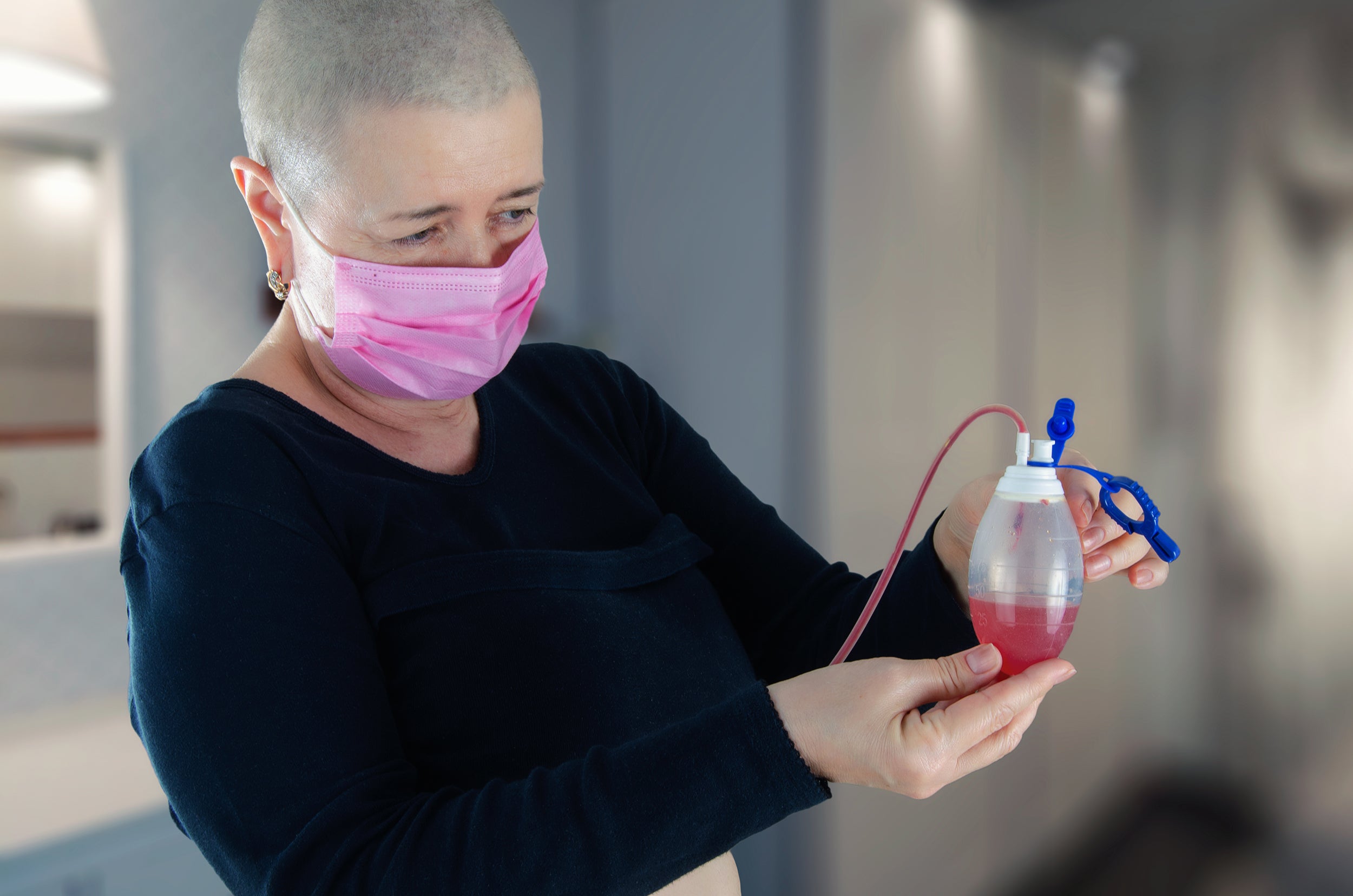
If there's one thing that tends to catch people off guard after a mastectomy, it's the drains. Not the surgery itself, not the recovery timeline, but those small, unassuming bulbs hanging at your side that most people have never had reason to think about before.
Here's the thing: mastectomy drains are not a complication or a setback. They're a deliberate, carefully planned part of your recovery. They are your surgeon's way of helping your body manage the healing process in the days and weeks after surgery.
Understanding what they are, how to care for them, and what to actually wear while you have them in can make a meaningful difference in how smoothly your recovery unfolds. Because when it comes to mastectomy recovery, preparation isn't just practical — it's empowering.
What Are Mastectomy Drains, and Why Will You Have Them?
When breast tissue is removed during a mastectomy, the body responds the way it always does to surgery: with inflammation and fluid production.
That's not a problem. It's your body doing exactly what it's supposed to do. The challenge is that the space left behind after tissue removal can accumulate more fluid than the surrounding area can absorb on its own. Left unmanaged, this fluid can cause swelling, discomfort, and create conditions where complications like infection or seromas — pockets of collected fluid — become more likely.
Surgical drains solve this elegantly. A thin, flexible plastic tube, roughly pencil-width and about 14 to 18 inches long, is placed at or near the surgical site during your procedure. The tube connects to a soft, bulb-shaped reservoir outside your body, which collects fluid as it drains. The bulb works through gentle suction, drawing fluid away from healing tissue continuously and keeping the surgical area clear.
Most mastectomy patients leave the hospital with one drain per surgical side. If you're having a bilateral mastectomy, plan for two. If your procedure involves reconstruction or more extensive lymph node removal, you may have additional drains in other locations. Your surgical team will explain your specific situation — but walking in knowing the basics means you won't be startled when you wake up with them in place.
The insertion sites are secured with sutures, so the drains stay exactly where they need to be. They're not fragile, and they won't come out accidentally with normal, careful movement. Knowing that alone tends to take the edge off the initial anxiety significantly.
How Long Will Mastectomy Drains Stay In?
This is one of the most common questions before surgery, and the answer is genuinely variable. The good news is that removal isn't based on an arbitrary timeline. It's based on how your body is healing, which means you have the real ability to support the process.
Drains are typically removed once daily fluid output drops below 20 to 30 milliliters per day for two consecutive days. That's a fairly small amount that most patients reach within one to three weeks of surgery. More extensive procedures, or surgeries involving significant lymph node removal, may mean drains stay in slightly longer. Every person's healing pace is their own.
What can meaningfully affect the timeline? Rest matters more than most people anticipate. Activity increases circulation to healing tissues, which increases fluid production. That doesn't mean staying completely still — gentle movement is actually encouraged — but it does mean that pushing yourself too hard too soon, reaching overhead, lifting anything substantial, or overestimating your capacity for activity can keep drainage output elevated and extend the time before removal criteria are met.
Your surgeon will provide a drain log for tracking fluid output at each emptying. Keeping it consistent is important as your surgical team uses those numbers to guide the removal decision.
Your Daily Drain Care Routine
Managing drains at home is one of the first hands-on roles you'll take in your own recovery. It sounds more involved than it is, and after a day or two, most people find it becomes a matter-of-fact part of the daily routine. Here's what to expect.
Emptying the bulb. When the bulb becomes approximately half full, it's time to empty it — typically two to four times per day in the first week when output is highest. Hold the drain tube above the bulb, open the plug at the top of the bulb, and pour the contents into the measuring cup or device provided by your care team. Record the amount in your drain log, then compress the bulb fully before replacing the plug to re-establish suction. That compression step is what keeps the drain working. Without it, the bulb won't draw fluid effectively.
Milking the tube. Occasionally, drainage fluid thickens as it moves through the tube and creates a partial clog. To prevent this, gently "milk" the tube once or twice a day: pinch the tube at the top near the insertion site and slide your fingers down toward the bulb, coaxing any material along. It takes about ten seconds and becomes second nature quickly.
Caring for the insertion site. The area where the tube enters the skin needs gentle daily attention. Clean around the site with warm water and mild soap, allow it to dry fully, and replace any gauze pads your team provided. Keeping the site clean and dry is one of your most important defenses against infection during this phase.
Securing your drains. This is where so much of the day-to-day comfort or discomfort of drain life originates. Drains that dangle freely pull on the insertion site, catch on clothing, and make movement genuinely uncomfortable. Finding a reliable way to keep them secured — close to your body, without tension on the tubes — changes the entire experience. The section on what to wear covers this in detail.

What to Wear to Help Manage Mastectomy Drains
Clothing becomes an entirely different conversation when surgical drains are part of the picture. The parameters are clear: nothing that goes over your head, nothing requiring you to reach behind your back, nothing tight across the chest, and — critically — something that can hold your drains securely so they're not pulling with every step you take.
For tops, button-front shirts, zip-up hoodies, and front-opening robes are genuinely useful rather than just convenient during this phase. When your range of motion is limited and your chest is healing, the ability to dress and undress without lifting your arms is meaningful for both comfort and protecting your incisions. Keep a small collection of these accessible before surgery and consider sizing up slightly to accommodate swelling and the added bulk of drain management at your sides.
For bottoms, elastic-waist pants, joggers, and loose pajama-style options work well — no complicated fastening, no bending required. Slip-on shoes and slippers complete the picture. The goal for the first two weeks is to make every aspect of getting dressed simple and low-effort.
The bra question — and why it matters most.
Of all the clothing decisions you'll make for this recovery phase, what you wear closest to your body matters most.
Regular bras — with underwires, back closures, and pressure points designed for healthy tissue — aren't appropriate against healing surgical sites.
What you need is a bra that provides gentle compression to support healing tissue, closes at the front so you can manage it independently, and accommodates your drains without relying on safety pins, improvised loops, or fabric knots.

The Larissa Bra: Your New BFF for Mastectomy Drain Management
The Larissa Post-Surgical Bra from heart&core was designed with exactly this phase of recovery in mind. At the heart of the design is the built-in drain bulb tab — a patented feature with a wide, flat band that keeps drain bulbs lying flat against the body rather than swinging freely. No pins, no rings, no catching on things as you move through your day. The drains simply rest where they should, supported and discreet.

Beyond drain management, the Larissa Bra brings together the features that genuinely matter for post-surgical wear:
✓ The front closure uses medical-grade Velcro® that's easy to manage at every level of mobility — no fine motor challenges, no contorting.
✓ Adjustable straps adapt as swelling changes throughout recovery, which it will, sometimes significantly, day to day.
✓ A sporty racerback design keeps straps from sliding off the shoulders during extended wear.
✓ The fabric is a 95% nylon/5% spandex blend that is silky-soft against sensitive skin, antimicrobial, breathable, and quick-drying.
✓ A seamless tag means nothing scratchy against healing tissue.
✓ Internal pockets accommodate breast forms, puffs, or cold packs, depending on where you are in your recovery.
All heart&core bras are FSA and HSA approved through sig-is.org.
Plan to have at least two on hand before you go in. Wash on a cool cycle, hang to dry, and you'll have them ready to rotate throughout the drain phase and well beyond it.
Navigating Daily Life With Drains
Knowing what the routine looks like in theory is useful. Here's how to approach the specific situations that come up in the first few weeks of recovery.

Sleeping. You'll need to sleep on your back for the duration of the drain phase, which is a real adjustment if you're a side or stomach sleeper. The Sleep Again Pillow System is the world's top-rated mastectomy pillow, and it's sold right here! Its unique design prevents rolling onto your side throughout the night.
Showering. Your surgical team will give specific guidance on when showering is permitted and how to protect your incision sites. Once you're cleared — typically 24 to 48 hours after surgery, though this varies by surgeon and procedure — a lanyard or small shower pouch worn around the neck keeps drain bulbs safely out of the water stream and prevents them from dangling. Avoid directing the showerhead directly at surgical sites, use gentle movements, and keep your sessions brief until your range of motion and energy levels improve.

Getting in and out of cars. Short trips to follow-up appointments are an inevitable reality in the early weeks. A chest pillow designed specifically for mastectomy recovery can help protect incisions and drains while you're being transported between followup appointments.
Organizing your living space. Set up your home so that everything you reach for regularly is at waist level. Frequently used items on high shelves or low in cabinets become genuine obstacles when overhead reaching and deep bending are off the table. A small tote or pouch worn across the body keeps drain bulbs managed during movement around the house on days when you're not wearing your recovery bra.
Pacing activity. Gentle walking — short, slow, beginning in your home and extending outside as you feel ready — supports circulation and is generally encouraged from the first couple of days post-surgery. Significant exertion and lifting anything heavier than a very light bag are off the table until your surgeon specifically clears you. When in doubt, doing somewhat less rather than more in the first two weeks tends to support faster drain removal and a smoother overall recovery trajectory.
Warning Signs to Watch For
The large majority of mastectomy drain experiences are uneventful. But part of being genuinely prepared is knowing exactly when to call your surgical team without hesitation, and understanding that those calls are expected and welcomed, not a burden.
Contact your surgeon promptly if you notice any of the following: increasing redness, warmth, or swelling at the insertion site rather than stable or improving; drainage fluid that develops a foul odor or turns cloudy, green, or milky; a fever above 101°F; drainage output that is increasing rather than steadily decreasing over time; or any loss of suction in the drain bulb that re-compression doesn't restore.
If the drain tube becomes dislodged or partially pulled from the insertion site, do not attempt to reinsert it yourself. Contact your surgical team promptly.
None of these situations are reasons for alarm, but they do require timely attention. Knowing the list in advance means you're responding thoughtfully rather than anxiously if any of them arise.
When Drains Come Out — and What Comes Next
Drain removal is a quick in-office procedure, typically done at a scheduled follow-up appointment once your output has consistently met the removal threshold. The sutures holding the tube in place are cut, and the tube is drawn out in a smooth, steady motion. Most people describe it as a brief sensation of unusual pressure rather than pain — and it's typically far less uncomfortable than the anticipation of it. The small insertion site closes on its own within a few days and heals fully over the following weeks.
Once drains are out, you'll notice an immediate improvement in comfort and freedom of movement. Getting dressed becomes simple again. Sleep is easier. The next phase of recovery — focused on healing, beginning gentle range-of-motion exercises as cleared by your team, and settling into a new normal — can begin in earnest.
Your surgical bra remains important through this phase and beyond. Compression continues to support healing tissue, manage swelling, and provide the structural support your chest needs as it recovers. If you've been using the Larissa Bra from heart&core, the drain management tabs simply lie flat once the drains are gone — the bra is designed to carry you through the full arc of recovery, not just the drain chapter.
This moment — drains out, the most demanding daily management behind you — is often when people describe feeling a real shift in how recovery feels. You've done the hard part. What's ahead is healing, and you're already on the way.
FAQ: Your Top Questions About Mastectomy Drains
How many drains will I have after surgery?
Most patients have one drain per surgical side, with additional drains possible for more complex procedures involving reconstruction or lymph node work. Your surgical team will outline what to expect for your specific procedure.
What does the drainage fluid look like, and is the color change normal?
The color change is a normal and healthy part of healing. In the first day or two, fluid is typically dark red or red-tinged. As healing progresses, it transitions to lighter pink and then to a pale yellow or straw color. Fluid that becomes cloudy, develops an unusual color like green, or carries an odor warrants a call to your surgeon.
Can I shower with drains in place?
Generally, yes, once your surgical team gives clearance, though timing varies by surgeon and procedure, so follow your care team's specific instructions.
How do I accurately track drain output?
Your surgical team will provide a drain log. Empty bulbs at consistent times each day when possible — morning and evening is a common approach — and record each measurement immediately after emptying. Bring the log to every follow-up appointment. Consistent, accurate tracking directly informs the drain removal decision.
What should I do if a drain bulb loses suction?
First, compress the bulb fully and ensure the plug is firmly and completely seated. If suction still doesn't hold, contact your surgical team. Don't attempt to adjust or reposition the drain tube itself.
Will drain removal hurt?
Most patients describe it as a brief moment of unusual sensation — a feeling of pressure or a strange pulling — rather than significant pain. It's typically over quickly and is nearly always less uncomfortable than people anticipate beforehand.
Can I sleep in my post-surgical bra while drains are in?
Yes, and it's often recommended. Keeping drains secured overnight prevents pulling on insertion sites during sleep and generally leads to more comfortable rest. Look for a bra designed for extended wear with soft materials, a front closure, and built-in drain management — the Larissa Bra from heart&core is designed for exactly this kind of round-the-clock recovery use.
Can I use FSA or HSA funds to pay for my mastectomy bras?
Yes. heart&core bras are FSA and HSA approved through sig-is.org. With a prescription from your doctor, you may also be eligible for insurance reimbursement. It's worth contacting your provider directly before your surgery to understand your specific coverage.
Disclaimer
This article is intended for informational purposes only and does not constitute medical advice. Every mastectomy recovery is individual, and drain management protocols, wear schedules, and activity guidelines vary based on your specific procedure, surgical approach, and overall health.
Always follow the instructions provided by your surgical team, and contact your healthcare provider promptly with any concerns about your recovery or drain function. The garment features described in this article are general considerations for post-surgical recovery — specific product choices should be made in consultation with your care team.


